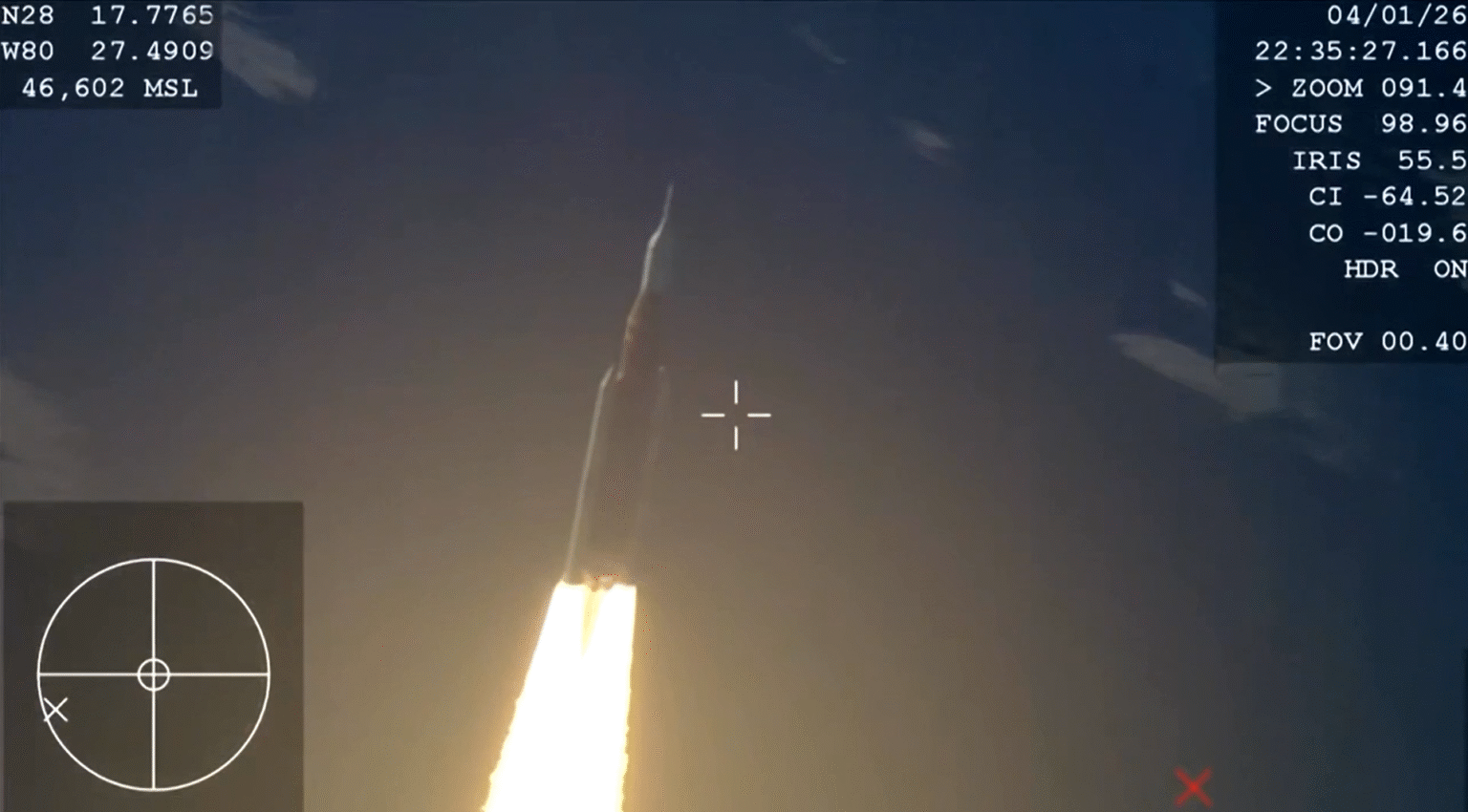
After more than five decades since the Apollo 11 Moon Landing, NASA is preparing for its first crewed lunar mission under the Artemis program. The Artemis II mission marks a major step toward sending humans back to the Moon and eventually to Mars.
Launched in April 2026, this mission will carry four astronauts on a journey around the Moon, making it the first time humans travel beyond low Earth orbit since the Apollo era.
What is Artemis II?
Artemis II is the first crewed test flight of NASA’s Orion spacecraft, launched atop the powerful Space Launch System (SLS) rocket.
Key mission details:
Mission duration: Around 10 days
Crew: Four astronauts
Spacecraft: Orion capsule
Rocket: Space Launch System (SLS)
Objective: Fly around the Moon and safely return to Earth
Unlike the Apollo missions that landed astronauts on the lunar surface, Artemis II will focus on testing systems needed for future landings.
𝑰𝒏𝒔𝒕𝒂𝒈𝒓𝒂𝒎 𝑭𝒐𝒏𝒕𝒔 𝑮𝒆𝒏𝒆𝒓𝒂𝒕𝒐𝒓 : Click Here
Why this mission matters
The Artemis II mission is not just symbolic it has real strategic and scientific importance.
First human deep-space mission in decades
This is humanity’s first crewed mission into deep space since the 1970s, pushing the boundaries of human exploration.
Foundation for future Moon landings
Artemis II paves the way for Artemis III, which aims to land astronauts on the Moon, including the first woman and the first person of color.
Global space race intensifies
The mission comes as countries like China accelerate their lunar ambitions, making the Moon a key focus of international competition.
Artemis vs Apollo: What’s different?
While Apollo proved that humans could reach the Moon, Artemis is designed for long-term exploration.
Artemis aims to build a sustainable human presence on the Moon, including a planned lunar space station called Gateway.
What happens next?
After Artemis II, NASA plans to move quickly toward landing astronauts on the Moon again.
Upcoming missions:
Artemis III: Planned Moon landing
Future missions: Building lunar bases and infrastructure
Long-term goal: Human missions to Mars
The success of Artemis II will be critical in determining how soon humans can return to walking on the lunar surface.
Why the world is watching
The Artemis II mission is more than just a NASA project – it represents a new era of space exploration. With international partnerships and growing private-sector involvement, the Moon is once again becoming a destination for innovation, science, and competition.
As the mission unfolds, it could redefine humanity’s future in space and inspire a new generation of explorers.